
Images:
Suggested research question:
What is the relationship between branding and The Consumer Self?
- Is the packaging more important to consumers than the quality of the product?
References:
Humphery, K. (1998) Shelf Life Supermarkets and the Changing Cultures of Consumption, Cambridge: Cambridge University Press
Bowlby, R. (1993) Shopping with Freud, London: Routledge
Cummings, N. and Lewandowska, M. (2000) The Value of Things, London: August
Harrison, R. and Newholm, T. and Shaw, D. (2005) The Ethical Consumer, London: SAGE Publications
Cialdini, R. (1993) The Psychology Influence of Persuasion, New York: William Morrow & Company, Inc.
Throughout my essay I will explore the thesis that consumers are becoming so reliant on brand perception that the quality of the product itself is less important. I want to explore this further because visual communication is such a massive part of consumerism, as mostly the look of the product is what persuades people to buy it rather than the actual product itself. Because this is such a big part of everyday society, the audience should want to learn more about how this impacts on them as an individual.
The first thing the reader will need to know will be a bit of history on branding, since as society changes, branding and packaging have replaced the need for a relationship with the shopkeeper, meaning the brand needs to be strong enough for the product to sell itself (Humphery, 1998, p.65 & 87). My audience will then want to know more about how people often fall into the trap of believing advertising as reality (Cummings, and Lewandowska, 2000, p.76), which causes them to purchase new brands, beginning to reveal the falsity of consumerism (Bowlby, 1993, p.3)
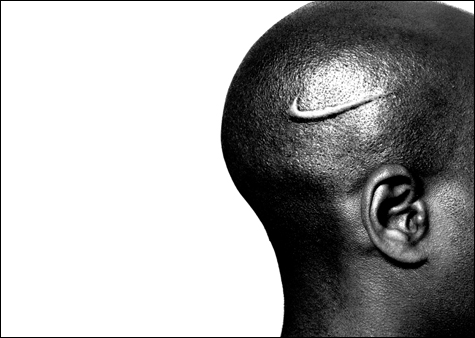
My audience will probably then want to know more about the reasoning behind branding, and how it works, as due to the high volume of items on the market, a wide choice needs narrowing down to the appropriate consumer (Humphery, 1998, p.93). I will then discuss whether once this initial brand impact has been made it can be difficult to change brand loyalty (Cialdini, 1993, p.73), or if brand loyalty is more of a myth (Humphery, 1998, p.126). Here I will also look at the connotations of fig. 1.
If possible I will undertake my own research here in order to find out if viewing the products packaging alters the consumers’ willingness to buy the product, possibly through blind tastings.
The reader will then want to learn more about the place of consumers within the shopping industry, so I will explore the idea that consumers do not realise they are no longer in control anymore, as buying has become more of a performance than anything (Cummings and Lewandowska, 2000, p.22 & 131). In order to explore this further I will discuss how consumers may buy in order to fill the desire to have the newest and best (Humphery, 1998, p.193), but not necessarily what is needed or desired (Bowlby, 1993, p.8 & 14-15).
Finally, I will discuss the impact all of this has on the individual, and how this consumerism is not just the big companies’ faults, as consumers fuel it (Humphery, 1998, p.196), and in a way direct it, for example as the public begin to become more concerned with ethics in consumerism (Harrison, Newholm and Shaw, 2005, p.202), the shop must reciprocate in order to keep loyal customers (Bowlby, 1993, p.95). I will also look at the possibility of shops using this concern for ethicality to promote their brands through false intentions, and what impact this has on the everyday consumer (Harrison, Newholm and Shaw, 2005, p.223 & 228).

No comments:
Post a Comment