Thursday, 29 October 2015

Lecture- History of Type

Type is what language looks like, it is the translation and visualisation of language, which includes tone and accent.

All that is necessary for language to exist is an agreement amongst a group of people that one thing will stand for another.

Cuneiform System:  Pictograms lost early forms and became conventional signs

1450- Johannes Gutenberg-producing/designing type through wood press
1870- William Foster brought in the education act
1919- Walter Gropius established the difference between the form and function of type
1919-33- Bauhaus brought creatives together with industrials for mass production- mass produced type to create mass produced type matter
1957- Max Miedinger created the Helvetica typeface
1982- Microsoft created the Ariel typeface, 25 years after Helvetica, enough time for intellectual property to lapse
1990- Steve Jobs creates the macintosh, the first computer to have a mouse and be affordable

There is no single approach within typography that applies to everything


Cop workshop

Through looking at our chosen collected images, we produced a set of drawings related to different aspects, such as things which demonstrate the image, places which show the image or careers which are related to them. 

We then created visual responses to our own drawings in order to establish a piece which encompasses the main points from the collection of images. I thought this process was really valuable as it is an interesting introduction into how to translate information quickly into a visual collection of images, which is a huge part of the Context of Practice module.


Wednesday, 21 October 2015

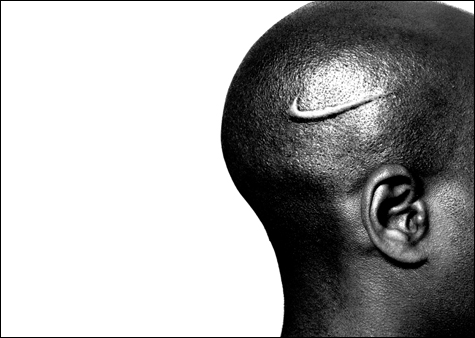
What is the relationship between branding and The Consumer Self?


Sources:
https://s-media-cache-ak0.pinimg.com/736x/28/20/95/28209580a6f31c2beb26cd47374e2bce.jpg
http://blogs.icemd.com/blog-neuromarketing-when-the-brain-sells/wp-content/uploads/sites/732/choices_268x268.jpg
https://s-media-cache-ak0.pinimg.com/736x/ac/0b/f2/ac0bf20edc93f74d1388838f20b51564.jpg
https://s-media-cache-ak0.pinimg.com/736x/10/cc/17/10cc17f115a6fb81d62cd83221912e6d.jpg
https://s-media-cache-ak0.pinimg.com/736x/bc/88/e2/bc88e252ba2e867792e4dab92da95917.jpg
https://s-media-cache-ak0.pinimg.com/474x/60/0f/ec/600fecead1982c3f68b2db6ae3a84f49.jpg
https://themediaameetingpoint.files.wordpress.com/2012/04/adb320e6bcd8f88770ef6a29f78ac528
https://s-media-cache-ak0.pinimg.com/474x/3c/e0/a2/3ce0a21b15b1bf54de0f5ad4b6c6552c.jpg
https://s-media-cache-ak0.pinimg.com/736x/72/63/9c/72639cdcb8d8d505f3c7c7db5b9093ce.jpg
https://s-media-cache-ak0.pinimg.com/736x/ed/6e/b4/ed6eb4ff7bfab85c777d745002adf023.jpg
https://s-media-cache-ak0.pinimg.com/474x/28/0e/4d/280e4da5db8002063fbc4d0dc2279efd.jpg
https://s-media-cache-ak0.pinimg.com/474x/50/c1/e9/50c1e9751e6241e340957d04d5cb6b26.jpg
http://en.geourdu.com/wp-content/uploads/2012/11/Chris-Jordan-Main-02.jpg
http://www.incaproductions.co.uk/wp-content/uploads/2014/03/Chanel-686x437.jpg
http://images.elephantjournal.com/wp-content/uploads/2014/11/target-ad.jpg
https://cgutie8.files.wordpress.com/2014/02/world-of-consumerism.jpg
http://thephoenix.com/secure/uploadedImages/The_Phoenix/Arts/Museum_And_Gallery_Reviews/BRANDED_willisinside.jpg
http://www.adbot.in/wp-content/uploads/2015/05/Coke-and-Pepsi.jpg
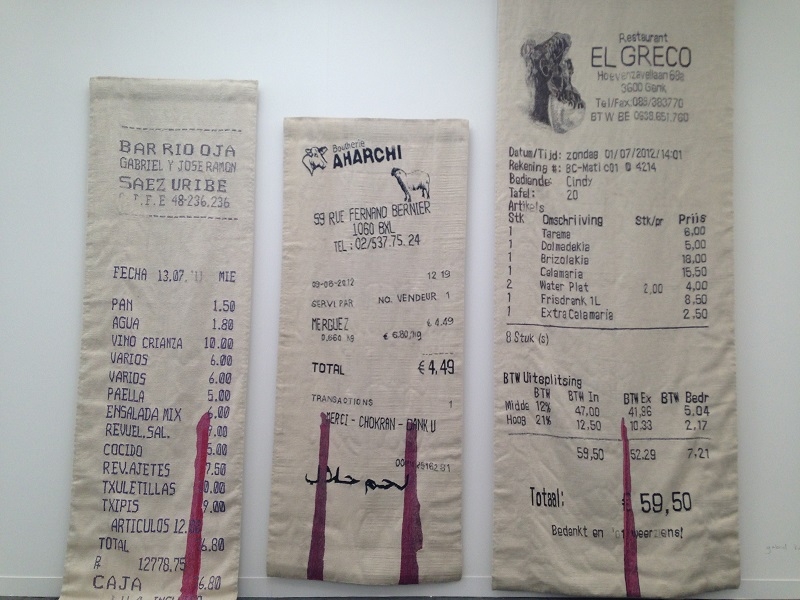
http://mongoosmagazine.com/wp-content/gallery/frieze-2/gabriel-kuri-receipts-2013-kurimanzutto-gallery-1.jpg
http://farm4.static.flickr.com/3697/13166813923_84530939e7_m.jpg


Monday, 19 October 2015

Study task 2 Reading and understanding a text


Tone of voice
Authoritative but unbiased

5 key points

- Power is balanced between different social aspects, which all have their own automatous values, yet the outcome varies depending on situation and specific situations
- Ideologies impact on every aspect of peoples lives, the only way this isn’t the case is if things are viewed through a scientific discourse
- Messages are constructed by relying on peoples shared knowledge, meaning that value can be found through the connotations of what is not in the text just as much as what is in it
- Deliberate spaces within advertising should not be criticised, as the choice to exclude them is just as important as the choice to include them
- Consumerism is a never ending circle of products creating an attraction, which ensures consumers want to purchase them initially, trapping them into a cycle of buying and consuming and buying and consuming

5 key quotes
- Social formation consists of three practices: the economic, the political and the ideological
- The relationship is both real and imaginary in the sense that ideology is the way we live our relationship to the real conditions of existence at the level of representations
- To read a text symptomatically therefore, is to perform a double reading: reading first the manifesto text, and then, through the lapses, distortions, silences and absences.
- competent critical practice is not to make a whisper audible, nor to complete what the text leaves unsaid, but to… explain the ideological necessity of its... structuring incompleteness
- Like all ideology, advertising functions by interpellation

Evaluation
Throughout the text, Storey talks broadly of Althusserianism and the impacts this has on audiences, especially with regard to how consumers respond to advertising. When considering historical views and traditions, as well as the politics of modern social interaction, he explains that ‘Social formation consists of three practices: the economic, the political and the ideological’. Storey expands on this to show how power is balanced between different social aspects, which all have their own automatous values, yet the outcome varies depending on situation and specific situations. The cultural impacts of this are the way ideologies impact on every aspect of peoples lives, with the only way of this not being the case is if things are viewed through a scientific discourse. He explains this through the theory that, within advertising, ‘the relationship is both real and imaginary in the sense that ideology is the way we live our relationship to the real conditions of existence at the level of representations’. Furthermore, through considering the cultural considerations of a text, a double reading must be performed ‘reading first the manifesto text, and then, through the lapses, distortions, silences and absences’, as messages are constructed by relying on peoples shared knowledge, meaning that value can be found through the connotations of what is not in the text just as much as what is in it. Because of this, deliberate spaces within advertising should not be criticised, as the choice to exclude them is just as important as the choice to include them, as ‘competent critical practice is not to make a whisper audible, nor to complete what the text leaves unsaid, but to… explain the ideological necessity of its... structuring incompleteness’.  Due to this increase in knowledge of what makes a good advertising text, consumerism is growing rapidly, as the technology becomes available to make more and more, the functions of ‘interpellation’ ensure that consumerism is a never ending circle of products creating an attraction, which ensures consumers want to purchase them, trapping them into a cycle of buying and consuming and buying and consuming [Storey, 2008:70-79]

Storey, J. (2008) Cultural Theory and Popular Culture', 5th ed, London: Pearson. pp. 70-79. 

Sunday, 18 October 2015

Group task

In order to help us decide which essay question to pursue this year, we split into groups to explore a specific subject area, which for us was the difference between print and digital. We researched images and information through the library resources, and came up with two images and definitions which we felt outlined the practice, as well as beginning to explain the relationship between printing and culture.

Traditional Media: The medium that was the means of communication and expression before the digital era.

Digital Media: Digitised media that can be transmitted over the internet or computer network. This can include text, audio, visual and graphics.

Sources:
Naïve- Modernism and Folklore in contemporary Graphic Design -Gestalten
500 years of printing -S.H. Steinberg


Wednesday, 14 October 2015

Lecture- The History of the Image

An incredibly important part of being an illustrator is to use the history of visual communication to influence practice, as well as constantly introducing philosophical and theoretical approaches.

The earliest known image making was from the Lascaux caves, France 17000 years ago, and still mark making techniques are an incredibly important part of image making, as they are often unconscious references to our own personal experiences.

One huge reference to image history is the Mona Lisa, as now the famous nature of the painting has over taken the actual regard for the skill and content of the work.

As Jackson Pollock said, 'art can be much more about production as final outcome, it is a record of psyche'. The production of work can become an emblem for the free mind of the western world,  which often works by launching attacks on cultural authority. This can often work through the reproduction of famous works, such as the Mona Lisa or Obama's campaign imagery, but altered to show the falseness of how they're seen with such reverence.

However, now there in a growing re-appropriation by the art world, where images created to contradict the typical artistic views, such as the work created by Banksy, which is now being taken from their original position to be hung instead in art galleries. This complete juxtaposition of the context of his work can also be seen as an act of art in itself, as this anarchy against Banksy shows the strong psyche of the people involved.

Overall the art world now seems to be striving to create controversial and shocking images, which go further than advertising their ideologies, but make sure the opinions of the audience are as much a part of the installation as the piece itself.